
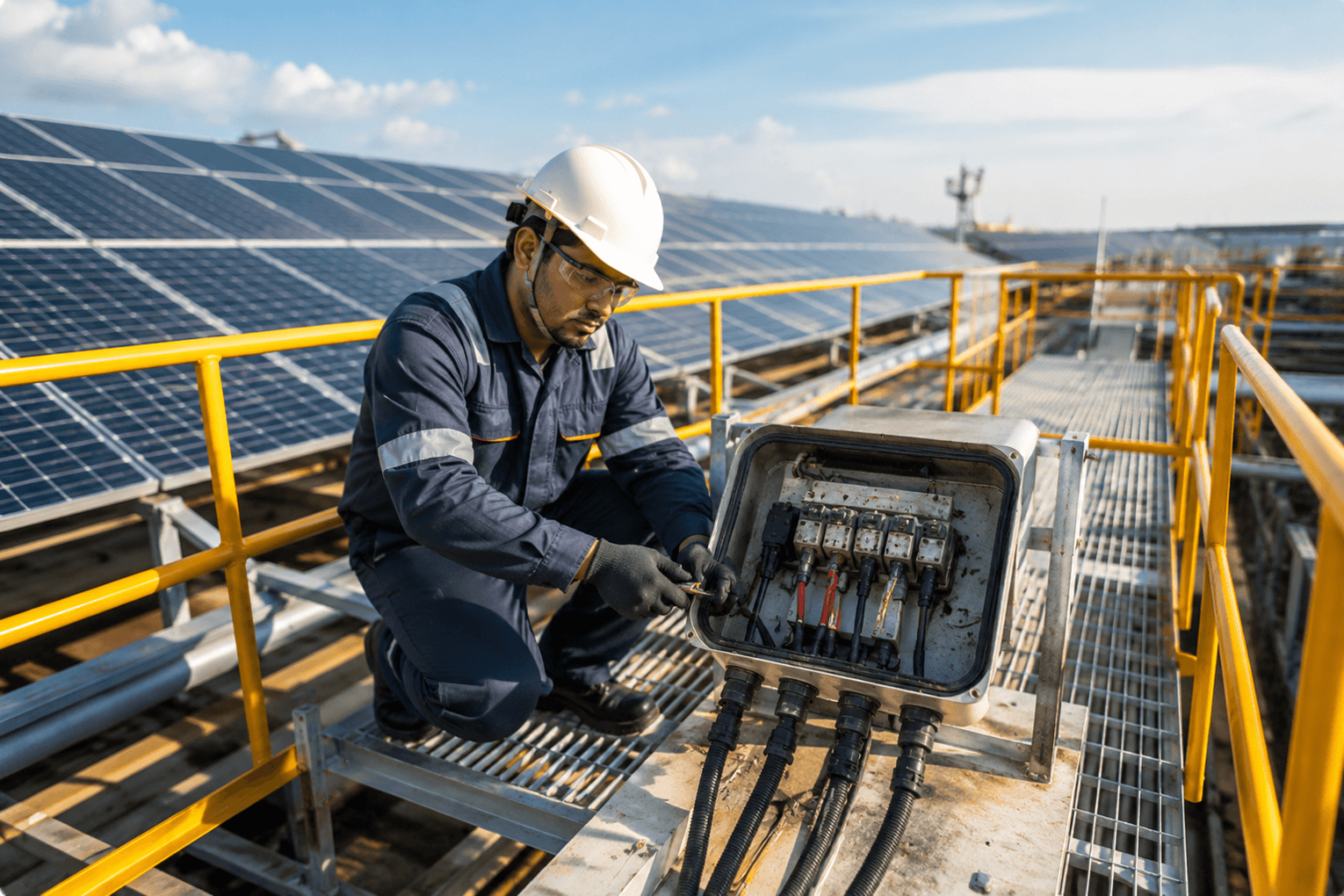
Solar energy systems are designed to last 20-25 years, but their long-term performance depends heavily on one often-overlooked factor, sealing integrity. Even small sealing failures can gradually reduce efficiency and damage system components.
What are Sealing Failures in Solar Systems?
Sealing failures occur when protective barriers in solar installations degrade, allowing external elements like moisture, dust, and heat to enter sensitive areas.
Key areas include:
- Solar panel layers
- Junction boxes
- Cable entry points
- Inverters and connectors
- Mounting interfaces
How Sealing Failures Reduce Efficiency
a. Moisture Ingress & Corrosion
Water entry can cause corrosion, short circuits, and gradual power loss, even in small amounts.
b. Delamination of Panels
Moisture and air cause layer separation, reduced light absorption, and hotspot formation, lowering output.
c. Increased Electrical Resistance
Damaged seals increase resistance in connectors, leading to energy loss and overheating.
d. Dust Accumulation
Seal breaches allow dust to settle in critical areas, blocking sunlight and reducing performance.
e. Thermal Stress Damage
Temperature changes cause expansion and contraction, leading to cracks and weakened bonds over time.
Long-Term impact, if ignored, sealing failures can result in:
- 10–30% drop in energy output
- Higher maintenance costs
- Reduced system lifespan
- Risk of system failure
Prevention Measures
- Use high-quality sealants and encapsulation materials
- Conduct IP65/IP67 testing
- Regular thermal imaging inspections
- Proper installation by certified technicians
- Routine maintenance of connectors and junction boxes
Conclusion
Solar system efficiency is not determined by panels, small details like sealing quality play a major role in long-term performance. By prioritizing proper sealing, regular inspections, and quality installation practices, solar systems can maintain higher efficiency, lower maintenance needs, and deliver reliable performance for years to come.
Add a Comment