
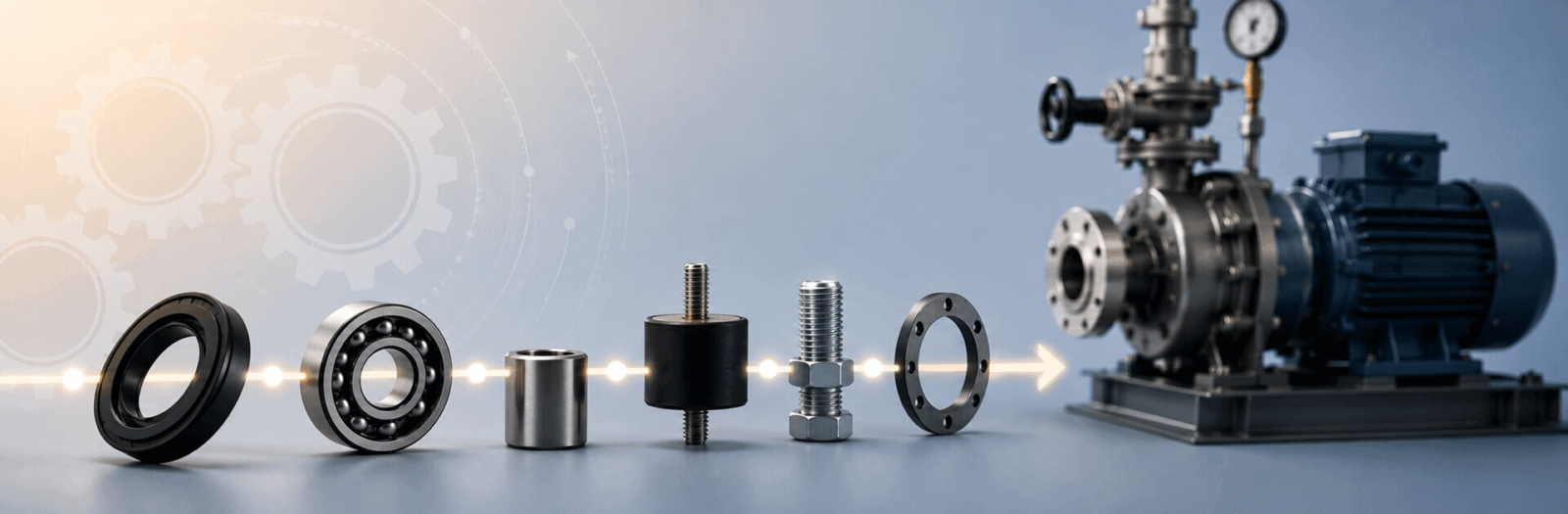
A machine is more than a collection of large assemblies. Its reliability depends on hundreds or even thousands of components working together. From bearings and seals to fasteners, mountings, and gaskets, every part plays a role in keeping the system running efficiently. When one small component fails, it can create a chain reaction that affects the performance of the entire machine.
Table of Contents
ToggleSmall Component, Big Consequences
A component may be small in size but significant in function. For example, an oil seal prevents lubricant leakage and protects internal components from dust and contaminants. If the seal fails, lubrication can be compromised, leading to increased friction, overheating, component wear, and eventually machine downtime.
This demonstrates an important engineering principle: the impact of a component is not determined by its size, but by its role within the system.
Key Factors That Build Machine Reliability
- Component Quality: High-quality components are better equipped to withstand demanding operating conditions and reduce premature failures.
- Correct Material Selection: Materials must be chosen according to temperature, pressure, load, chemical exposure, friction, and environmental conditions.
- Precision Manufacturing: Accurate dimensions and tight tolerances ensure that components fit and function correctly within the larger assembly.
- Proper Component Selection: A component designed for one application may not perform reliably in another. Application-specific selection is essential.
- System Compatibility: Components must work effectively with surrounding parts. Poor compatibility can create additional stress, vibration, leakage, or wear.
- Quality Testing: Inspection and testing help identify defects and performance issues before components are used in critical machinery.
- Preventive Maintenance: Regular inspections and timely replacement of wear components can prevent minor issues from becoming major failures.
When One Failure Becomes a Chain Reaction
Modern machines operate as interconnected systems. A failure in one component can place additional stress on other parts.
For instance, a damaged mounting can increase vibration. Excessive vibration can affect bearings, shafts, fasteners and connected assemblies. Similarly, a failed hydraulic seal can cause pressure loss, reducing the efficiency of the entire hydraulic system. This interconnected nature makes system-level reliability more important than simply evaluating individual components in isolation.
Reliability Starts at the Component Level
Building a reliable machine begins with understanding the operating environment of every component. Engineers need to consider questions such as:
- What loads will the component experience?
- What temperature and pressure will it operate under?
- Will it be exposed to dust, moisture, chemicals, or contaminants?
- How frequently will it operate?
- Which other components depend on its performance?
- What could happen if it fails?
Answering these questions during the design and selection stage can help prevent costly failures later.
The Business Impact of Reliability
Component reliability directly affects more than machine performance. It also influences productivity, maintenance costs, operational safety and equipment lifespan.
A low-cost component failure can sometimes result in expensive repairs, production delays, replacement parts and unplanned downtime. Investing in reliable components and proper engineering can therefore provide significant long-term value.
Conclusion
Machine reliability is built one component at a time. A small seal, bearing, mounting, or gasket may appear insignificant compared with an entire machine, but its failure can initiate a chain reaction that affects the whole system. By combining quality materials, precision manufacturing, proper component selection, system-level engineering, rigorous testing and preventive maintenance, manufacturers can strengthen every link in the reliability chain.
Add a Comment