Case Study

Turning Engineering Drawings Into Production-Ready Components

In industrial manufacturing, a drawing is more than a visual representation of a component. It defines the dimensions, tolerances, material requirements, geometry, and functional expectations that the finished component must meet.

The challenge begins when an engineering drawing needs to be transformed into a precise, production-ready component that can perform reliably within a larger assembly.

This case study looks at how Achievo Engineering approaches the journey from technical drawing to precision lead component, with a focus on engineering interpretation, manufacturing accuracy, quality control, and application requirements.

The Challenge

The requirement was to manufacture a lead component based on an engineering drawing with specific dimensional and functional requirements.

The challenge was not simply to reproduce the shape shown in the drawing. The component needed to maintain dimensional accuracy while also meeting the required material, tolerance, surface finish, and application requirements.

Key considerations included:

  • Understanding the engineering drawing correctly
  • Identifying critical dimensions and tolerances
  • Selecting the appropriate material
  • Planning the manufacturing process
  • Maintaining dimensional consistency
  • Inspecting the finished component against the drawing
  • Ensuring the component was suitable for its intended assembly

In precision manufacturing, every stage of the process can influence the final result.

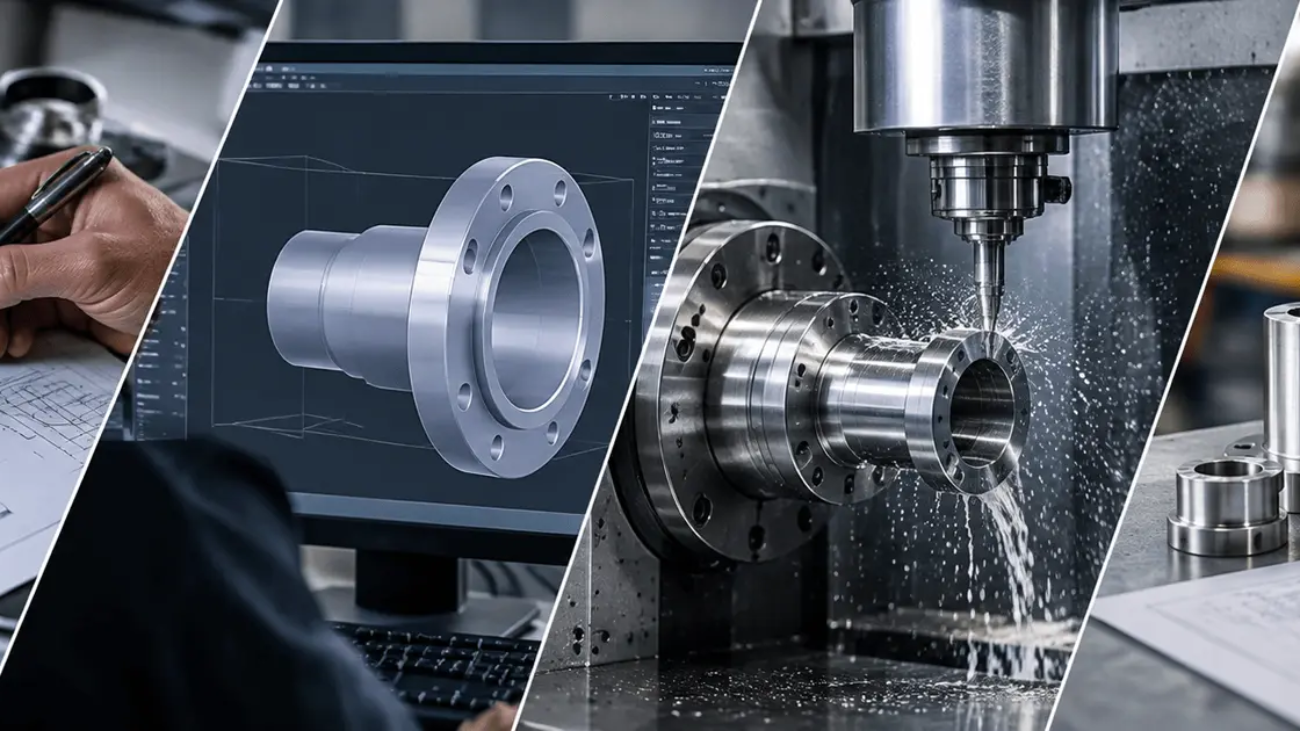
Step 1: Understanding the Drawing

The process begins with a detailed review of the engineering drawing.

Dimensions, tolerances, geometry, holes, profiles, threads, surface requirements, and other specifications are evaluated before manufacturing begins.

Critical dimensions are identified based on how the component will function within the final assembly.

This initial stage is important because an incorrect interpretation of even one specification can affect the manufacturing process and ultimately the performance of the component.

Step 2: Material and Manufacturing Planning

Once the drawing requirements are understood, the next step is to determine the appropriate material and manufacturing approach.

Material selection depends on the component’s intended application and operating conditions. Factors such as mechanical loads, temperature, friction, chemical exposure, wear, and environmental conditions may need to be considered.

The manufacturing process is then planned around the component’s geometry, required accuracy, production requirements, and material characteristics.

The objective is to create a process that can consistently reproduce the required component—not simply manufacture one acceptable part.

Step 3: Precision Manufacturing

With the process defined, manufacturing begins.

Depending on the component design, precision machining and other suitable manufacturing operations may be used to achieve the required geometry and dimensions.

Particular attention is given to critical areas where dimensional variation could affect assembly or performance.

During production, process control helps maintain consistency across components and reduces the risk of dimensional deviations.

Step 4: Dimensional Inspection

Manufacturing is only one part of precision engineering. Verification is equally important.

The finished component is inspected against the requirements specified in the engineering drawing.

Key parameters may include:

  • Overall dimensions
  • Critical diameters
  • Hole dimensions and positions
  • Thickness
  • Threads or profiles
  • Tolerances
  • Surface finish
  • Visual and dimensional condition

Inspection provides the link between what was specified on the drawing and what was actually produced.

Step 5: From Component to Assembly

A precision component ultimately has to work as part of a larger system.

Therefore, the final evaluation considers more than dimensional compliance. The component’s fit, interface, and intended function within the assembly are also important.

A component can meet individual dimensional specifications but still create problems if the surrounding components, operating conditions, or assembly requirements have not been considered.

This is why Achievo’s approach focuses on understanding the component in the context of its application.

The Result

The outcome is a precision-manufactured lead component developed through a controlled engineering workflow:

Engineering Drawing → Requirement Analysis → Material Selection → Process Planning → Precision Manufacturing → Inspection → Application-Ready Component

This approach helps convert design intent into a physical component with controlled dimensions and repeatable manufacturing quality.

What This Case Demonstrates

This project highlights an important aspect of industrial component manufacturing:

Precision does not begin on the machine floor. It begins with understanding the drawing.

From interpreting technical specifications to selecting materials, planning production, manufacturing accurately, and inspecting the finished component, every stage contributes to the final result.

For industries that depend on close-fitting, application-specific components, this structured approach can help improve consistency, reduce manufacturing errors, and support reliable assembly performance.

Why Engineering-Led Manufacturing Matters

When a component is manufactured directly from an engineering drawing, there is little room for assumptions.

The manufacturer must understand not only what the component looks like, but also what each dimension, tolerance, material specification, and surface requirement means for its final application.

That is where engineering-led manufacturing becomes valuable.

At Achievo Engineering, the focus is on connecting design requirements with manufacturing capabilities to produce precision industrial components tailored to specific requirements.

Conclusion

Taking a component from drawing to finished product requires more than machining capability. It requires engineering understanding, process control, manufacturing precision, and quality verification.

Every dimension on a drawing has a purpose. Every tolerance communicates a requirement. Every inspection step helps confirm that the final component matches the intended design.

From the first line on the drawing to the final inspection, precision is built into every stage of the process.

Achievo Engineering — Turning Engineering Requirements Into Precision Components.
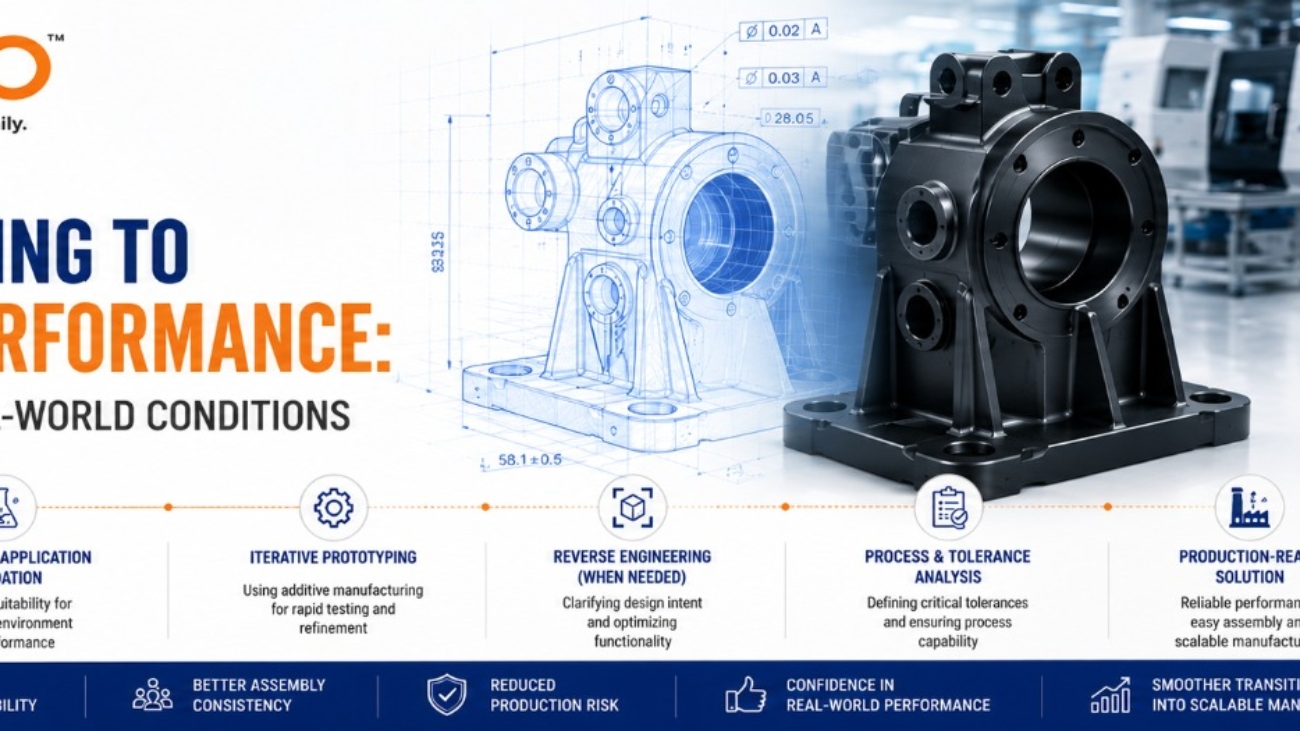
Engineering for Real-World Conditions

From Drawing to Reliable Performance: Engineering for Real-World Conditions

Background

An OEM approached us with a component that had been designed to meet dimensional requirements. On paper, the design appeared complete and manufacturable.

However, before moving into production, several practical challenges needed to be addressed to ensure reliable field performance.

The Challenge

A successful product must do more than match a drawing.

The component needed to:

  • Perform under actual operating temperatures
  • Withstand working pressure and mechanical loads
  • Be easy to assemble on the customer’s production line
  • Maintain consistent performance during repetitive use
  • Be suitable for volume manufacturing

Without validating these factors early, the project risked delays, redesigns and higher production costs.

Our Approach

Our engineering team reviewed the design from both a manufacturing and application perspective, taking an agile, iterative approach to development.

The evaluation included:

  • Material suitability for the operating environment
  • Manufacturability of the component geometry
  • Ease of assembly during production
  • Critical tolerances affecting functionality
  • Process capability for repeatable production

Where required, we applied iterative design cycles, using additive manufacturing to rapidly produce and test prototypes. This enabled faster validation of design changes and reduced development time.

In cases where design intent needed refinement or clarification, reverse engineering techniques were used to better understand functional requirements and optimize the component accordingly.

Multiple prototype iterations were developed, tested and refined before finalizing the production-ready design.

The Result

The final solution delivered:

✔ Improved manufacturability

✔ Better assembly consistency

✔ Reduced production risk

✔ Confidence in real-world application performance

✔ A smoother transition into scalable manufacturing

Key Takeaway

A drawing defines dimensions.

Engineering ensures performance.

By combining application validation with iterative design, additive manufacturing and reverse engineering where needed, product development teams can reduce delays, improve reliability and accelerate successful product launches.

How Achievo Adds Value

At Achievo Engineering Components, we help OEMs bridge the gap between design and production through:

  • Design support
  • Rapid iterative prototyping
  • Additive manufacturing
  • Reverse engineering
  • Application validation
  • Design for manufacturing and assembly
  • Scalable production

Helping customers transform engineering concepts into reliable, production-ready products.

Why Product Development Projects Get Delayed Between Design and Production

Why Product Development Projects Get Delayed Between Design and Production

Many product development projects start with a promising concept and a well-thought-out design. Yet, despite the best intentions, delays often occur during the transition from design to production.

Interestingly, the challenge is rarely the design itself. The real challenge lies in converting a design into a manufacturable, scalable and reliable product that performs consistently in real-world conditions.

1. Frequent Design Changes

As prototypes are tested, new requirements emerge. Engineers identify improvements, users provide feedback, and components need refinement.

Design changes are a natural part of product development. The ability to rapidly incorporate these changes through iterative prototyping can significantly reduce overall project timelines.

2. Limited Manufacturing Involvement

Many products are designed first and handed over to manufacturing later.

This often results in:

  • Difficult-to-manufacture features
  • Higher production costs
  • Longer lead times
  • Unexpected quality issues

Early involvement of manufacturing teams helps identify potential challenges before they become expensive problems.

3. Prototype-to-Production Gap

A prototype that works successfully in testing may not always be suitable for mass production.

Material selection, tolerances, tooling requirements and process capabilities must all be evaluated before scaling production.

Bridging this gap requires close collaboration between design and manufacturing teams.

4. Managing Multiple Technologies

Modern products often combine rubber, plastic and metal components within a single assembly.

Coordinating multiple suppliers during development can increase complexity and extend timelines.

Working with partners who understand multiple manufacturing technologies can simplify development and improve speed.

5. Assembly Challenges at the User End

Even when components are manufactured correctly, issues can arise during assembly at the customer’s facility.

Common challenges include:

  • Components that are difficult to assemble or require excessive force
  • Misalignment due to tight tolerances or inconsistent dimensions
  • Lack of clarity in assembly procedures
  • Increased assembly time leading to higher operational costs

Designing with assembly in mind—often referred to as Design for Assembly (DFA)—helps ensure that products are easy to handle, fit and install in real-world conditions.

6. Overlooking Application Parameters

A design that performs well in controlled testing may fail when exposed to actual operating conditions.

Critical application parameters are sometimes underestimated or not fully validated, such as:

  • Torque requirements
  • Temperature variations
  • Pressure conditions
  • Friction and wear behavior
  • Non-flammability or safety requirements

Ignoring these factors can lead to premature failures, performance issues or compliance risks once the product is deployed.

Early validation of these parameters during prototyping helps ensure that the final product performs reliably in its intended environment.

7. Scalability Considerations

Many development projects focus on proving the concept.

However, production success requires answering additional questions:

  • Can the design be manufactured consistently?
  • Can quality be maintained at higher volumes?
  • Can lead times remain predictable?

Considering scalability early in the development process reduces future risks.

Conclusion

Successful product development is not just about creating a functional design. It is about creating a design that can be validated, manufactured, assembled and scaled efficiently under real-world conditions.

Organizations that integrate design, prototyping, application validation and manufacturing expertise early in the process often reduce development time, improve product quality and accelerate commercialization.

At Achievo, we support OEMs through design support, rapid iterative prototyping and scalable manufacturing solutions, helping bridge the gap between concept and production.

Rapid Prototyping

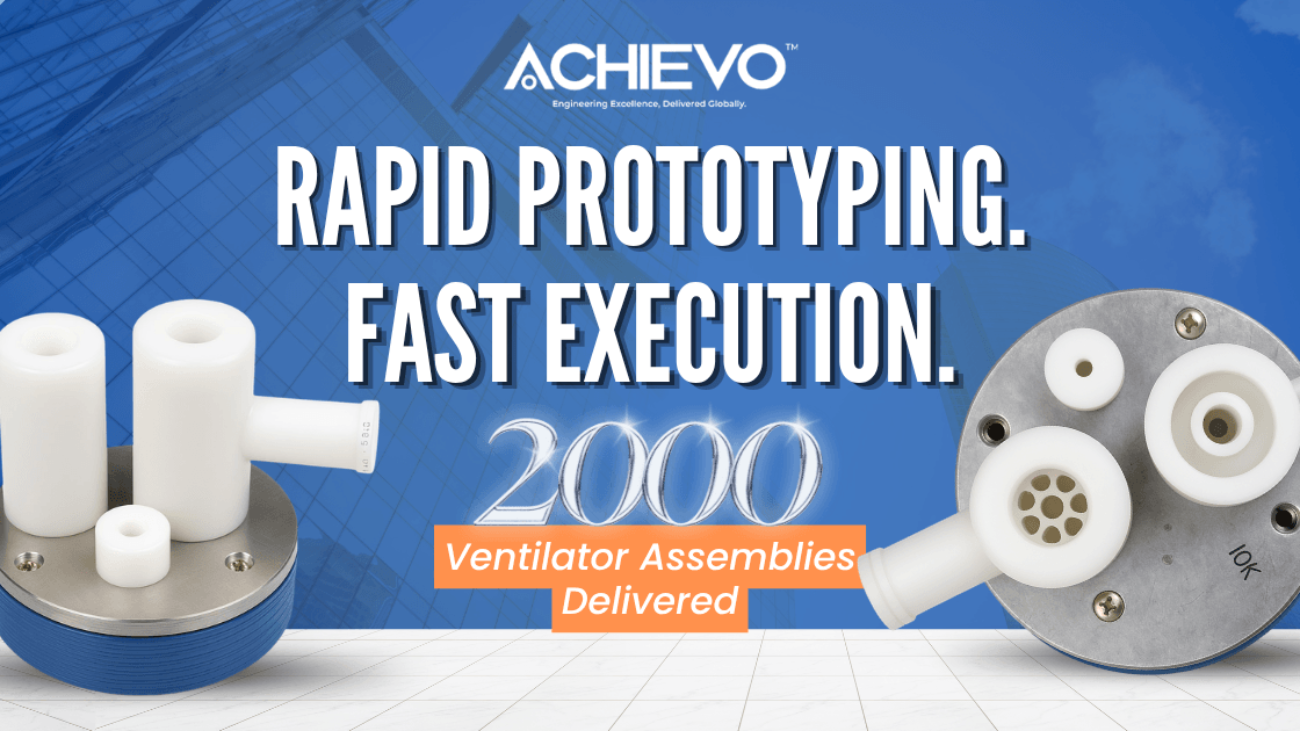
From Rapid Prototyping to 2000 Ventilator Assemblies in 2 Months

During the peak demand for ventilator systems, we were entrusted with the development and manufacturing of a critical pump assembly used in ventilators.

The assembly included:

  • POM-C precision plastic components
  • Silicone rubber bellows
  • Aluminium assembly plate
  • Multi-part engineered assembly

This was not a standard production project.

The product design was evolving continuously, with multiple incremental changes from the customer during the development phase. The challenge was not only manufacturing the components, but also supporting extremely fast design iterations while ensuring functionality and assembly reliability.

Our Approach

At Achievo, we worked closely with the customer’s engineering team and established a rapid-response prototyping process.

  • Design revisions were converted into prototypes within hours
  • Multiple iterations were developed and tested continuously
  • Tooling and assembly adjustments were carried out in parallel
  • Cross-functional coordination helped accelerate validation cycles

This collaborative and agile development approach enabled the customer to finalize the pump design successfully under demanding timelines.

Final Outcome

✅ Successful development of the final ventilator pump assembly
✅ Supply of 2000 complete assemblies within 2 months
✅ Reliable performance across multiple production batches
✅ Smooth transition from prototype stage to production execution

Key Learning

In critical applications such as medical devices, success depends not only on manufacturing capability, but also on:

  • Speed of prototyping
  • Flexibility during design evolution
  • Process discipline
  • Ability to manage multi-material assemblies under time pressure

At Achievo, we support OEMs from concept to production across rubber, plastics, metals, and engineered assemblies for critical applications.


#MedicalDevices #Ventilator #RapidPrototyping #OEM #Engineering #Manufacturing #ProductDevelopment #Healthcare #MedicalEngineering

From Prototype to Production

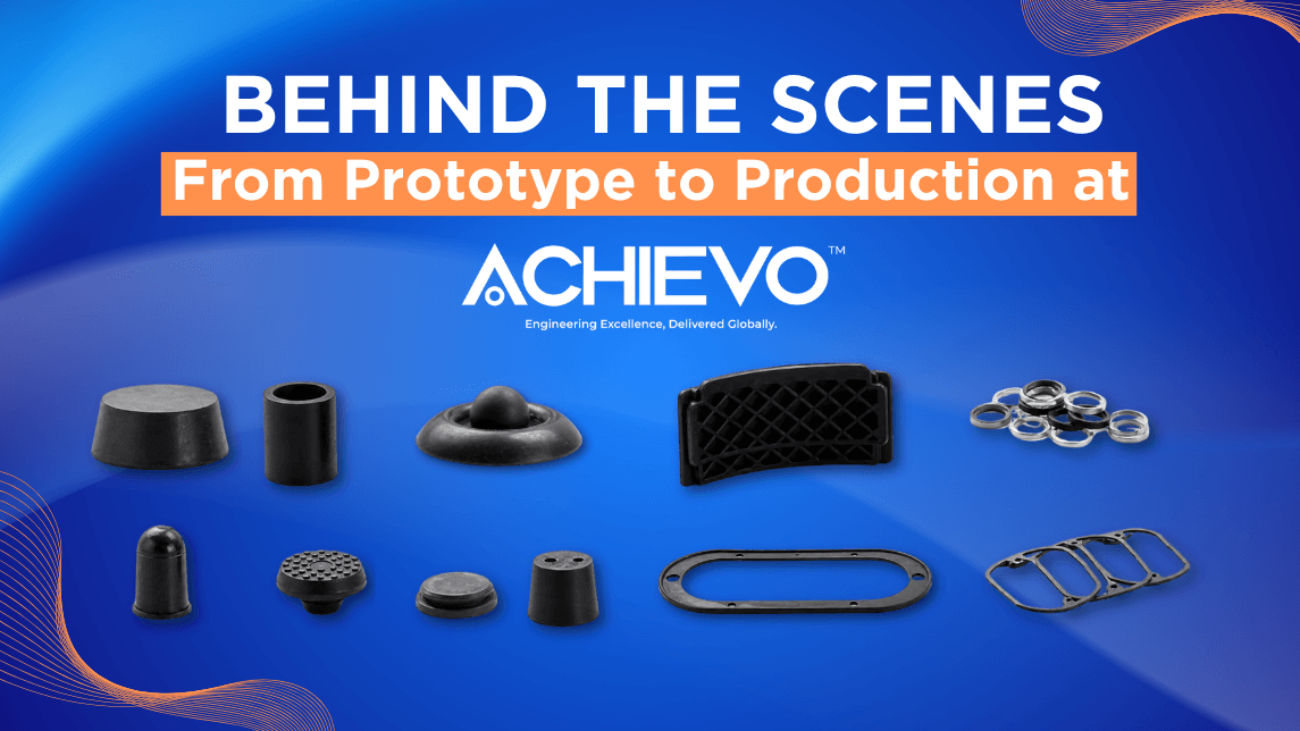
From Prototype to Production: Building Customer Trust Through Iteration & Speed

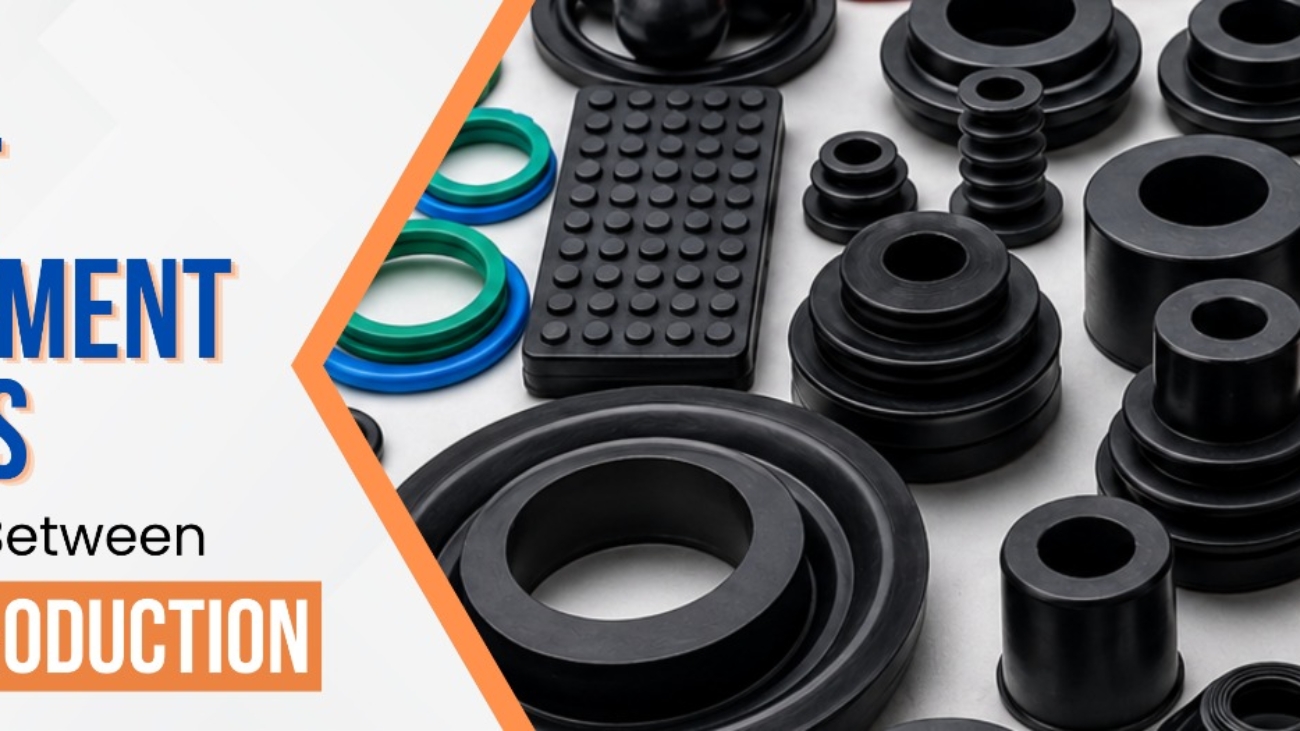
One of the biggest challenges in OEM development is not capability, it is an ability to iterate quickly without slowing down the process. This case study demonstrates how focusing on speed, flexibility, and practical design improvements can significantly impact outcomes. 

The Scope

We were engaged to develop:
• 2 pressure cooker safety components (whistles / pressure valves)
• 2 rubber components (including one for a hot kettle application)

Pressure Valve Development (Ongoing)

This is a safety-critical component, where precision is non-negotiable.

  • Completed 2 rounds of iterations
    • Introduced minor but critical design improvements for:
    – Safety
    – Optimum pressure control
    • Latest batch (10 pcs) currently under testing
    • One more iteration expected

In many OEM setups, such iterations become slow and expensive due to internal administrative layers.

In this case, the customer trusted us to:
✔ Move quickly
✔ Suggest improvements
✔ Execute iterations without delays

Rubber Component, Fast Track Approval

For the first rubber component:

  • Initial samples developed and submitted quickly (FOC)
    • Feedback → minor hardness adjustment
    • Second round submitted → Approved

Result: Order received for initial lot
Next step: 100-cavity mold for mass production

Rubber Component (Hot Kettle Application)

  • Developed using a 2-cavity mold
    • Submitted samples

Approved in the first attempt
Now awaiting production order

Key Insights

OEM development is not just about manufacturing capability.

It’s about:
• Speed of iteration
• Willingness to absorb early-stage effort
• Ability to suggest practical design improvements
• Reducing the customer’s internal burden

Our Approach at Achievo

We focus on:
✔ Quick prototype turnaround
✔ Practical, engineering-led design inputs
✔ Supporting multiple iterations without friction
✔ Ensuring smooth transition to mass production

This project reinforced successful OEM partnerships that are not built during mass production, but during the development phase. Speed, flexibility, and a proactive approach to problem-solving ultimately define long-term collaboration. If you’re working on new product development and need a responsive partner for rubber or critical components, we are happy to connect.

#OEM #ProductDevelopment #RubberComponents #Manufacturing #Engineering #PressureCooker #MakeInIndia #Innovation #B2B